Get paid To Promote at any Location
Tampilkan postingan dengan label geography. Tampilkan semua postingan

Selasa, 08 Maret 2011

Macau

Excerpts from an interesting article at The Guardian:
You won't find the Paiza Mansions on TripAdvisor. You can't even book the world's plushest hotel – it chooses you. The 6,000 sq ft suites (the size of five semi-detached houses) are reached by private elevator, and come with two butlers and a masseur. Yet it costs nothing to stay there. The surprisingly tasteful suites (despite the 60in end-of-bathtub TVs) are completely free. There's just the small matter of a HK$10-15m (£800,000-£1.2m) that invitation-only guests are required to spend downstairs at the casino.

The Paiza Club and Mansions are part of the Macau Venetian, the world's largest casino, and the fifth biggest building on the planet. And every time you buy something with a Made in China label, much of the money eventually ends up here.

Las Vegas is puny in comparison. Chinese punters bet around £70bn on Macau's baize tables (they prefer baccarat) last month alone. This year it could reach £1tn, an almost unimaginably colossal sum. Think of all the cash issued from all the UK's ATMs last year. Then multiply it by five...

The other rather less acknowledged factor is money-laundering. The junkets take in Chinese renminbi (which cannot be converted on the world's money exchanges) while the casinos can pay out in dollars. Some critics believe Macau is a gigantic operation for secreting money away from the eyes of the Chinese state. Suitloads of dollars take the short hop from Macau to Hong Kong, much of it pouring into the city's white-hot property market. Even bigger sums are believed to head into offshore tax havens. The authorities, for now at least, turn a blind eye. The casinos are a huge cash cow for the Chinese state, too, which levies tax at 39%...

Macau's casinos are the world's most profitable – some repay billion-pound construction costs within a year.

Minggu, 30 Januari 2011

Jodhpur

Why the population of the fortress city – the Blue City as it is universally known – took to painting their houses in various shades of blue is not completely certain.  Yet most believe it is to do with the prevailing caste system in India.
From an interesting post with several dozen photos at Kuriositas,

Senin, 17 Januari 2011

The Oronteus Fineus map of an "ice-free Antarctica"

One of my "guilty pleasures" has been the reading of what some would term "fringe archaeology" articles and books - material that advocates viewpoints not in line with mainstream historical archaeology and history:  Vikings in America (the Kensington Runestone),  ancient astronauts (the Chariots of the Gods, the Nazca lines), lost continents, "unexplainable" artifacts, Zheng He's voyages to the Americas...

Occasionally I encounter references to an "ice-free Antarctica" and maps depicting it, including one I stumbled upon this week at Ancient Destructions -
In 1959, however, in the Library of Congress, Hapgood noticed a presumably authentic map that instantly wiped out his doubts: a map of what was almost certainly Antarctica, done in 1531 by the French cartographer Oronce Fine, also known as Oronteus Finaeus... Admittedly it is too close to the tip of South America, and it is incorrectly oriented, yet the proportions seem similar, the coastal mountains, found in the 1957 geophysical study are in roughly the right places and so are many bays and rivers. Furthermore, the shape of South America itself seems right, and the close resemblance between a modern, scientifically exact map of the Ross Sea and Finaeus' unnamed gulf is striking.

What is different, however, is that the Oronteus Finaeus map does not seem to show the great shelves of ice that, today, surround the continent, nor the great glaciers that fringe the coastal regions. Instead there seem to be estuaries and inlets, suggesting great rivers... It also suggested to Hapgood that since the Antarctic was certainly ice-bound in 1531 - when Oronteus Finaeus made his map - Finaeus must have had access to very ancient maps indeed: maps made when Antarctica was largely free of the mile-thick ice cap that buries it today, and presumably has covered it for millennia.
I've embedded the map above, and it is quite striking for a document from the early 1500s.  It took a bit of searching today, but I finally found a well-written (and extensively illustrated) site that addresses these questions from a "mainstream" point-of-view.
Some of the land depicted to the south of South America may be Antarctica, but the map also conflates that land mass with Tierra do Fuego itself and, more significantly, the continent of Australia (see the screencap above). 

So much for an ice-free Antarctica within recorded human history.  But the Kensington Runesone and Zheng He's voyages are still intriguing possibilities...  Stay tuned.

Rabu, 05 Januari 2011

An unusual cemetery in northern Iran

Three shrines and hundreds of tombstones left by an unknown people -
The cemetery lays in the northern part of Golestan province, in the mountains of Torkaman Sahra (Turkmen Desert) near the border with Turkmenistan... The holy place encompasses actually not one but three shrines, revered by local tradition as the tombs of the prophet Khaled Baba, his father-in-law Alaam Baba and his shepherd Chupan Ata...

Prophet Khaled himself is claimed in the legend hanging on the wall of the sanctuary to have been born in Yemen, his father was called Sanan, and he died here in 528, that is 42 years before the birth of Mohamed and 82 years before the beginning of Mohamed’s prophetic mission. The obvious question concerning the faith of which he was a prophet eighty-two years before the very foundation of Islam, is not raised in the legend. However, it is very probable that he was a Nestorian Christian, one of those who in this period migrated in a growing number to the north-eastern regions of the Persian empire, and from there further to China along the Silk Road...

In the cemetery laying a few hundred meters from the shrines around six hundred tombstones have been preserved. The stones are basically two kinds: either long columns ending in round hats which are sometimes two meters high or more, or smaller, squat grave posts similar to a cross where the two arms of the cross are replaced by two semi-circles or almost complete circles...

...if we project these places on the map, we see that almost all of them lay north of the majestic Gorgan Wall, built several centuries before Christ which, stretching from the Caspian Sea to the Afghan mountains, defended Iran from the attack of the northern tribes (and which was first excavated by the Hungarian Aurel Stein in 1915). Perhaps these cemeteries belonged to such tribes of the steppe, which would also give an explanation for the lack of any settlement around them.
If this interests you, there is more information and about three dozen more photos at Poemas del rio Wang.  I'm also intrigued by the reference to the Great Wall of Gorgan, the second longest in the world.  I have walked on the Great Wall of China and Hadrian's Wall and visited the Berlin Wall, but have never even heard of this one.  You learn something every day.

Is $10 billion buried on Robinson Crusoe Island?

Or is this just hype to encourage visits by tourists?  This from last month's Santiago Times:
Keiser, whose treasure-seeking effort on the island the past 12 years has cost him an estimated US$2 million, is reportedly in the process of shelling out another US$100,000 dollars for this latest effort, which includes highly sophisticated mining video technology.

But Keiser’s expenses will be well covered should he find the treasure: Chilean law will provide him 25 percent of any booty he discovers, and Keiser estimates the treasure’s value at US$10 billion.

According to legend, the treasure originated in the Incan Empire and was stolen during the Spanish conquest of Peru in the 16th and 17th centuries. When the treasure was en route to Spain around 1715, the navigator in charge of the ship landed on Robinson Crusoe Island and buried his cargo. Before he could return to unearth the booty, an English pirate named Cornelius Webb uncovered the Incan treasure and reburied it elsewhere on the island. The legendary stash is reported to contain 800 barrels of gold, including precious pieces of gold and jewelry.
More details on the story of the treasure and new developments in the quest are available at Death by 1000 Papercuts.  See also my two posts in 2009 about archaeological digs on the island, here and here.

Selasa, 04 Januari 2011

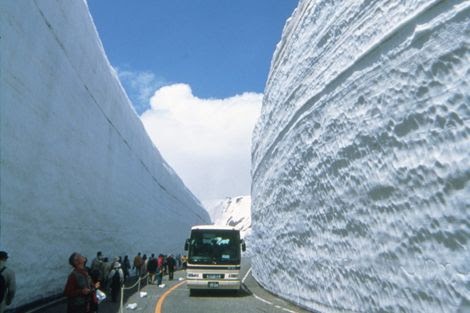
Deep snow. Really deep snow. Now with video.

 The location depicted is in the Japanese Alps:
The section of the Tateyama Kurobe Alpine Route linking the Tateyama station and Ogizawa only open from mid April to November, the reason for this hiatus is wintry snow, snow on this section reaches a thickness of 20 meters the most amazed of all is that in mid-April, much of the snow still lingers, so you have to make real corridors of ice to get through that stretch.
For those wondering (like me) how the snow is cleared from this road, this video shows the equipment needed.

Posted for Richard and Dottsie, who got the brunt of the 30" snowfall that hit northern New Jersey this week.

Text credit Genjutsu.  Photo via Gizmodo.

Addendum:  A hat tip to Karl, who found at Vimeo a video taken while driving through the "snow corridor."  I had no idea it was so long.  But what startled me was that where there are no pull-off lanes, drivers just stop and park their cars in the road. (!)

Kamis, 30 Desember 2010

India seen from space

This image is often claimed to have been taken during the annual festival of light, but it's actually a composite created by NOAA.

Via La Muse Verte.

Rabu, 17 November 2010

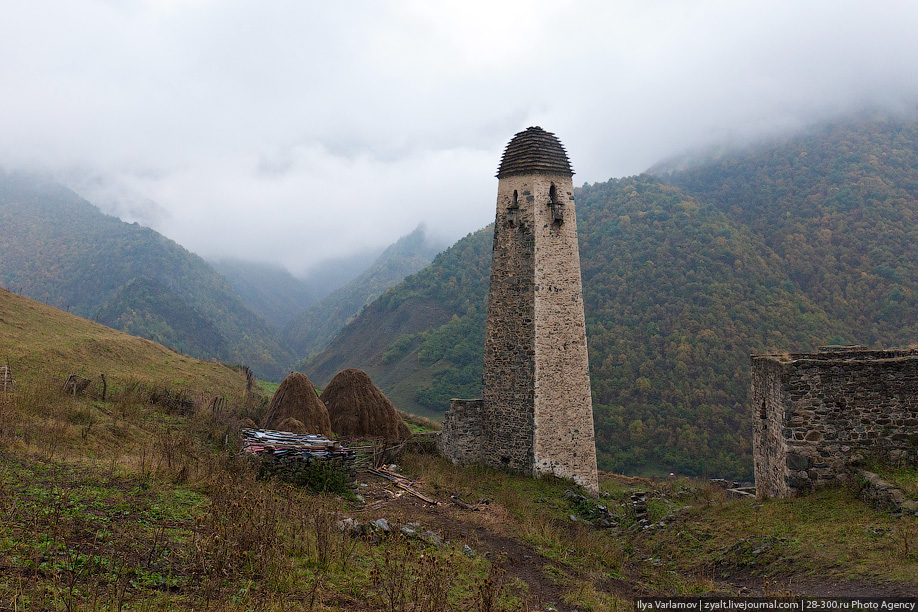
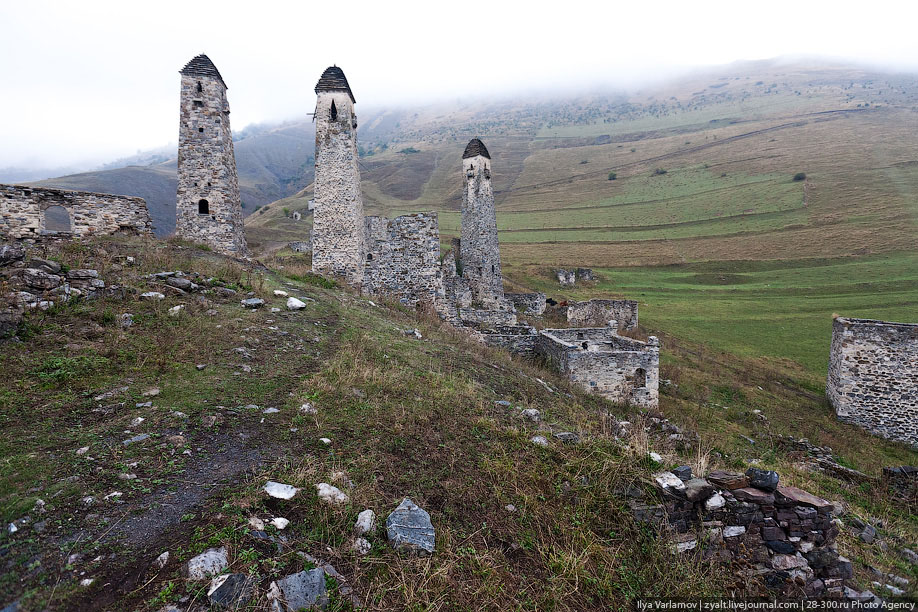
The "clan towers" of Ingushetia

Three selections from an interesting photo gallery, discussed in English at Poemas del rio Wang: 
Clan towers – родовые башни – or, named after the people building them, Vainakh towers, combined multiple functions. They were living towers, impregnable fortifications, watchtowers dominating the valley controlled by the clan. And last but not least sacred asylums where blood-revenge was forbidden. Ismail Kadare in his Broken April tangibly describes the asylum towers that once stood all over the Albanian mountains and where men sometimes lived for years without ever coming out.

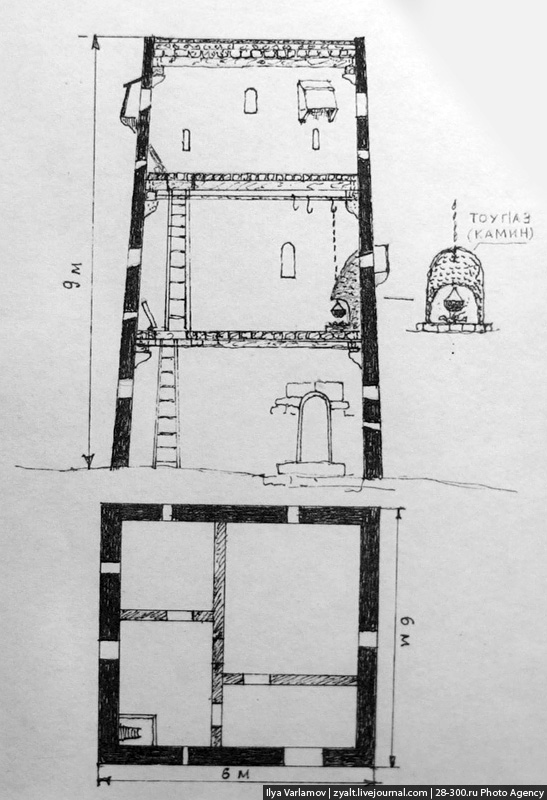
The towers have generally three to four floors. The first level – or, in four-storey towers, the first two levels – are the stall, in the latter case the second level is for the goats and sheep. The next floor is the living room, here’s the stove. The top floor serves for larder, treasure-house and armory as well as for guest accommodation, with projecting balconies for the ease of control...

The oldest surviving towers were built dry, but since the 16th and 17th century, the golden age of tower building – which was a period of turbulent external and internal wars in the Caucasus – they were reinforced with mortar. The internal structures, gates and shutters were made of oak, while the floors of pine wood. Beginning with the 16th century, loopholes became more and more frequent, which helps the researchers to reconstruct the spreading of firearms in the Caucasus...

Nowadays, most towers are uninhabited. The clan wars and external threats being over, the Ingushes went down to live in the more fertile river valleys. There are only a few old people sticking to their dwelling place or some shepherds left around to take care of them.
More information at the link.  And more photos.  I find the landscape almost as fascinating as the architecture.

Additional information about Ingushetia is contained in another post at the same blog:
Ingushetia broke away from the Chechen-Ingush Republic in 1992. This is how the Russian government wanted to isolate the more pacific part of the republic from the Chechens, at that time in war against the Russians...
During WWII the Ingush and Chechen people, following the tradition of several centuries of wars of independence, rose up against the Soviet power. This is why after the war Stalin deported both nations to Kazakstan, and settled Russians on their place. The survivors of the cruel deportation were permitted to return to their native land only by Khrushchev in the late 1950s. However, in the meantime a part of Ingushetia, including their former capital Vladikavkaz, and even the town of Ongush (in Russian Tarskoye) which had given name to the whole republic, were annexed by the Soviet authorities following the old policy of divide to the western neighbor, Northern Ossetia: this is the egg-shaped hole on the map of the republic.
More at the link, including some photos of, and observations about, Ingush weddings.

Kamis, 04 November 2010

The Great Wall of Ston (Croatia)

One of my most pleasant memories is that of walking along the top of the Great Wall of China.  I never knew there was a smaller counterpoint in Croatia, until I read a post at Kuriositas today:
The walls circle the village of Ston and then climb up the hill to reach the Pozvizd Fortress.  They then follow a narrow strip of land (an isthmus) to meet with the walls of the village of Mali Stan.

When they were built, starting in the fifteenth century, they were heavily fortified – there are thirty rectangular towers and ten round ones dotted along the five kilometre stretch.  What was it that they were built to protect?  Apart from serving as a first line of defense for the fairly distant city of Dubrovnik they were constructed to protect a precious commodity – salt.
Photo credits Martijn Munneke and Wikimedia.

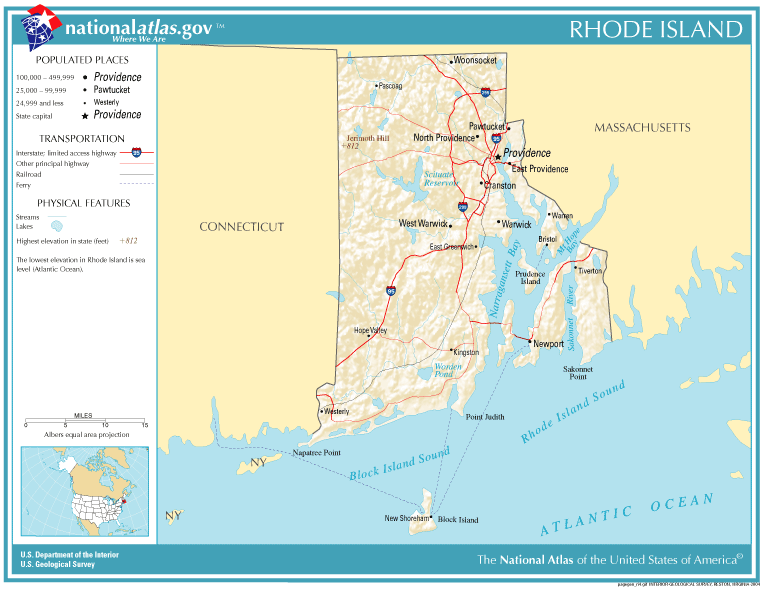
This is the state of Rhode Island AND ....

... AND Providence Plantations.  I may have learned that at some time in my life, but if so I had totally forgotten it and only re-learned it because a proposal to shorten the official name of the state to "Rhode Island" was defeated during this election.
The name Rhode Island and Providence Plantations derives from the merger of two colonies, Providence Plantations and Rhode Island. Providence Plantations was the name of the colony founded by Roger Williams in the area now known as the City of Providence. Rhode Island, the other colonial settlement, was founded in the area of present-day Newport, on Aquidneck Island, the largest of several islands in Narragansett Bay.

It is unclear how Aquidneck Island came to be known as Rhode Island. In 1524, the explorer Giovanni da Verrazzano noted the presence of an island near the mouth of Narragansett Bay, which he likened to the Greek island of Rhodes...
Image credit.

Addendum: As Boliyou points out in his comment, an alternative etiology for the name is Dutch explorers calling it "Roode Eylant" (Red Island).  That seems to make more sense to me.

Minggu, 10 Oktober 2010

The photography of Yann Arthus-Bertrand

Mountains near Jengish, Kyrgyzstan
 Walled City of Dubrovnik, Croatia

Embedded above are two photos from "Earth From Above," a collection of photos by Yann Arthus-Bertrand.  The book was published a decade ago, and I can't remember if I've viewed it before, but I see it's in our library...

These pix from a collection of three dozen at this link.

Selasa, 05 Oktober 2010

The Great British Euler diagram

Because many people need a reminder now and then.  Additional notes from the source:
The republic of Ireland and the United Kingdom are the only two sovereign states in this image. They are shown in red. Ireland and Great Britain are both islands and are shown in green. England, Scotland, Wales and Northern Ireland are constituent countries of the United Kingdom and are shown in orange. Here, the term "constituent country" is not used in the same way that "country" is usually used; England, Scotland, Wales and Northern Ireland are political entities within the UK, and it is the UK which appears in international bodies such as the United Nations and NATO...

There are many other islands in the British Isles which are not shown here. Most of these are politically part of England, Scotland, Wales, Northern Ireland or the republic of Ireland, with the exceptions of the Isle of Man and the Channel Islands, which are British crown dependencies and not part of the UK (or ROI) at all...

"Britain" is not a technically correct term for any political or geographical entity. Nevertheless, "Britain" is in frequent use, and taken to mean either "the UK" or "Great Britain". This usage is pretty unfair to Northern Ireland whichever way you look at it...

Ireland is popularly referred to as "the Republic of Ireland" in order to distinguish it from the island of Ireland, and the country is indeed a republic, but "the Republic of" is not part of the country's official name, and I suppose technically this means that the R need not be capitalised...
I am one of those guilty of using the term "Britain" (104 times so far in this blog).

Selasa, 14 September 2010

Inverted world

I have a map like this, made by a different company, but on the same principle, and I find it to be endlessly fascinating.  It is just as geographically valid, because only by convention do we put north at the top, and it just seems to alter my perspective of the planet.  (The way this is projected does of course distort/enlarge the polar regions, but that's not what I'm talking about).

Source.

Kamis, 26 Agustus 2010

"Falling off the end of the earth" nonsense

Earth at the center of the Spheres.
in Gossuin de Metz, L'Image du monde.
13th-century Copy.
"Medieval Europeans, even the most learned of geographers among them, are to this day often described as having believed that the world was flat.  But this simply isn't true.  Thanks in large part to the labors of Arab astronomers and mathematicians, ancient Greek proofs of the earth as spherical had survived into the Middle Ages and were circulating in Europe - and at some point early in the thirteenth century an English scholar known as John of Holywood, or Scrobosco, laid them out in an astronomical treaise appropriately titled The Sphere.  For centuries afterward the work would be taught and studied in schools and universities around Europe..."  [Among other arguments, Sacrobosco cited mariners' experience of seeing distant land from the top of a ship's mast, and different sets of stars visible at various latitudes.]
---excerpted from Toby Lester's The Fourth Part of the World
I am recurrently annoyed when I encounter descriptions of Columbus' crew being fearful of falling off the end of the earth because that is such a total misrepresentation of the worldview of the time.  It has been said that no educated person since the 3rd century believed the world was flat, and even uneducated persons could see the shape of the earth during eclipses of the moon.  Sailors probably knew of the earth's curvature better than anyone.

Columbus' crew may have been fearful and unruly, but not because of any fear of an edge to the earth.  They were concerned because they were sailing south - into the "torrid zone" - where they thought the heat might evaporate the water to render the seas too shallow for their ships.  They also may have been concerned that a westward voyage to reach the Indies was impossible because they didn't have enough food and water to cover such a distance (and they were correct - they didn't have enough provisions for a voyage to Asia and would in fact have died had they not bumped into the Americas).

But they never feared sailing off the end of the world.

Image credit, via Luminarium.

Addendum: Conor also points to the Farnese statue of Atlas, which depicts him holding a globe on his shoulders, and which dates from the 2nd century A.D.  [photo at left from Globalization Prehistorica: Maps that Change History website, which has some interesting info and illustrations].

Rabu, 18 Agustus 2010

"Journey Through Canyons" video


Another beautiful video from Vimeo, created by Metron:
"I went on the trip to Canyons in Arizona and Utah, visited Grand Canyon, Glen Canyon, Bryce Canyon, Zion Canyon and this film is the coverage of my trip."
With music by Nicholas Gunn.  If you're going to watch this, by all means click the symbol for fullscreen.

I've only been to one of those four canyons.  The others are on my "bucket list."

Minggu, 01 Agustus 2010

Rural Edwardian England

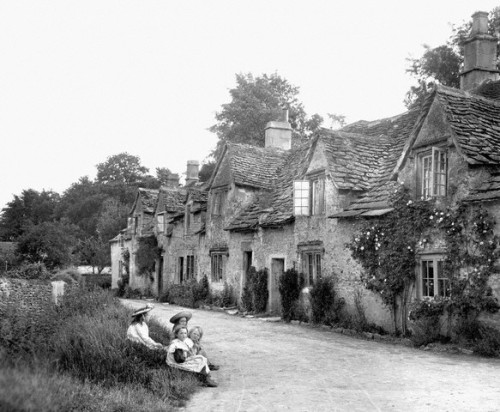
A photo of Corsham, Hudswell (in the Cotswolds) in 1907.  In another life I would have like to have lived here.  I can just imagine Miss Marple walking along this road a few decades later...


Found at Edwarding Era.

The architecture of Minneapolis


Starting with Philip Johnson's acclaimed IDS Tower in 1972 (which is still, perhaps, one of the best looking skyscrapers in the country) Minneapolis has seen architecture play an increasingly important role in the fabric of the city...

John Comazzi, a University of Minnesota Architecture professor, guides us around these Minneapolis landmarks, revealing some of the more interesting architectural details, facts and marvels. We start at the Walker Art Center's new addition by Herzog & de Meuron and conclude, fittingly, backstage at the new Guthrie Theatre building..."
As a kid I walked across those skyway bridges, and last summer I visited the new Guthrie and stepped out on that "endless bridge" which juts out over the riverfront.  It really is magnificent.

A thank-you to Anything and Everything for discovering and posting this.

Jumat, 23 Juli 2010

Tree canopy height

Using NASA satellite data, scientists have produced a first-of-its kind map that details the height of the world’s forests. Although there are other local- and regional-scale forest canopy maps, the new map is the first that spans the entire globe based on one uniform method...

The new map shows the world’s tallest forests clustered in the Pacific Northwest of North America and portions of Southeast Asia, while shorter forests are found in broad swaths across northern Canada and Eurasia. The map depicts average height over 5 square kilometers (1.9 square miles) regions), not the maximum heights that any one tree or small patch of trees might attain.

Temperate conifer forests -- which are extremely moist and contain massive trees such as Douglas fir, western hemlock, redwoods, and sequoias--have the tallest canopies, soaring easily above 40 meters (131 feet). In contrast, boreal forests dominated by spruce, fir, pine, and larch had canopies typically less than 20 meters (66 feet). Relatively undisturbed areas in tropical rain forests were about 25 meters (82 feet), roughly the same height as the oak, beeches, and birches of temperate broadleaf forests common in Europe and much of the United States...

Lefsky used data from a laser technology called LIDAR that’s capable of capturing vertical slices of surface features. It measures forest canopy height by shooting pulses of light at the surface and observing how much longer it takes for light to bounce back from the ground surface than from the top of the canopy. Since LIDAR can penetrate the top layer of forest canopy, it provides a fully-textured snapshot of the vertical structure of a forest -- something that no other scientific instrument can offer.
LIDAR is fantastic; I'll post later on its use for archeological discovery and mapping.  The map embedded above, from the NASA website, depicts the data for the United States.  A world map is also available.

Via Found Here.

Kamis, 22 Juli 2010

The aging of Minnesota residents

The deepening coloration depicts the percentage of Minnesotans over age 65 as a percentage of the population in a county.  I would doubt that this phenomenon is peculiar to Minnesota. The data from which the graphic was compiled comes from the U.S. Census Bureau, so there may be a national map available somewhere.

There are a variety of important implications from demographic changes of this magnitude.  Very interesting.

Credit: Ray Grumney, StarTribune.